

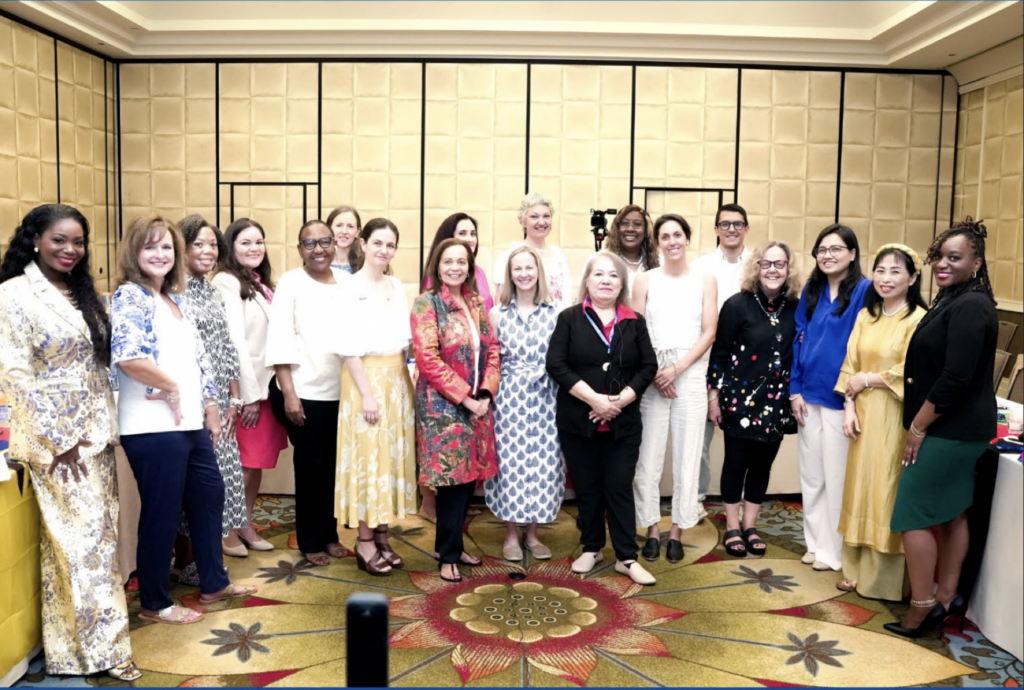
The best solutions come from the people closest to the issues, but getting them to a shared decision takes design, care, and skill. We plan and lead conversations where every participant is seen, heard, and respected, and where groups leave with clarity and commitment.
Retreats Focused time away for boards, leadership teams, and staff to reflect, align on priorities, and plan what’s next. We have expertise in nonprofit organizations and board governance.
Emergent Processes Multi-meeting efforts that build shared ownership over months, so participants shape the work from start to finish. Strategic planning, co-creation, and new initiatives are areas of expertise.
Convenings Gatherings that connect leaders across organizations, sectors, or countries to learn from one another and act together. We plan for all the touches that honor shared time together.
Workshops and Professional Development Interactive sessions that build skills on a specific topic, tailored to your team. Content includes:
Our facilitation is participatory and liberatory. We hold the space with what we call generous authority: clear structure and purpose, paired with real trust that the group holds the answers.
Participatory Participants aren’t an audience. They’re co-designers and decision-makers. Instead of presenting findings for reaction, we invite groups to make meaning of the information themselves, test our conclusions, and build the solutions. Small-group formats, gallery walks, and co-created agendas make sure every voice shapes the outcome, not just the loudest ones.
Liberatory We pay close attention to power: who usually speaks, who usually decides, and whose knowledge usually counts. Then we design to shift that power toward the people most affected. We draw on Liberating Structures such as Troika Consulting and Conversation Café, simple formats that spread participation across the whole group. Our practice is shaped by thinkers like adrienne maree brown (Emergent Strategy), Linda Tuhiwai Smith (Decolonizing Methodologies), and Priya Parker (The Art of Gathering). We welcome dissent, ambiguity, and complexity, and we leave room for what emerges, because the best answers are often the ones no one walked in with.
We believe everyone closest to an issue should be able to take part fully, not just those who can easily attend a meeting in English during the workday. So we design to remove the barriers that keep people out of the room.
Language justice Every participant deserves to listen, speak, and lead in the language they feel strongest in. We provide simultaneous interpretation so everyone can participate in real time, share materials, presentations, surveys, and emails in every language in the room, and set shared agreements that invite participants to correct assumptions about their community.
Trauma-informed supports Participation shouldn’t depend on whether someone can find child care or a ride. We design for safety, choice, and comfort, and we remove practical barriers by providing child care and transportation support, along with meals, accessible locations, and meeting times that work for families.
Stipends that honor lived experience Families and community members are experts in their own lives, and their time and knowledge deserve the same respect as any consultant’s. We build stipends into our budgets for parents, youth, and community members who share their expertise.
And in every engagement, we:
Tell us who needs to be in the room and what you hope they’ll decide. We’ll help design the rest.
